A Practical Handbag For Commuting And Travel Checklist For First Time Readers
A practical step-by-step guide to a practical handbag for commuting and travel checklist for first-time readers, including preparation, instructions, common issues, tips, and next steps.
A Practical Handbag For Commuting And Travel Checklist For First Time Readers
This guide helps first-time commuters and travelers choose and pack a practical handbag that keeps daily essentials organized, secure, and easy to reach. It covers selecting the right bag, preparing a core checklist, packing in a logical order, and adapting for different trips. You'll also find quick fixes for common issues, advanced tips for efficiency, and a final checklist to confirm you're ready before leaving home.
Fast Answer
- Choose a bag with at least three separate compartments, a zippered main opening, and an exterior pocket for items you need quickly, such as a transit card or phone.
- Pack heavy items like a water bottle in the center-bottom, place fragile or frequently used items in easy-access pockets, and keep valuables in an interior zippered compartment.
Before You Start
- List the items you carry every day, such as keys, phone, wallet, and reusable bottle, and set them aside in one spot the night before packing.
- Decide on the bag's main use: if you commute daily, prioritize organization and comfort; if you travel occasionally, focus on size and security features.
- Check the bag's straps and zippers for wear, and test that it fits under a typical seat or in a locker if you plan to use it on public transport.
- Plan the day's weather and activities so you know whether to include a compact umbrella, a light layer, or extra storage for purchases.
Step-by-Step Instructions
Choose the Right Bag Size and Shape
Start by measuring the largest item you carry daily, usually a laptop, tablet, or a large water bottle. Use a tape measure to find its height, width, and depth, and then compare these with the bag's dimensions you find on the product page or in the store. The bag should have at least two to three inches of extra space beyond your largest item so you can slide it in without forcing it. Also, consider the bag's shape: a structured tote keeps items upright, while a slouchy hobo may let smaller items shift and become hard to find. Test the bag on your shoulder with your heavy items inside; the strap should not dig into your shoulder, and the bag should stay close to your body when you walk. A practical bag also has a flat bottom so it stands upright on the floor or a train seat, which makes packing easier and keeps your belongings from spilling out when you set it down.
Set Up a Core Packing Checklist
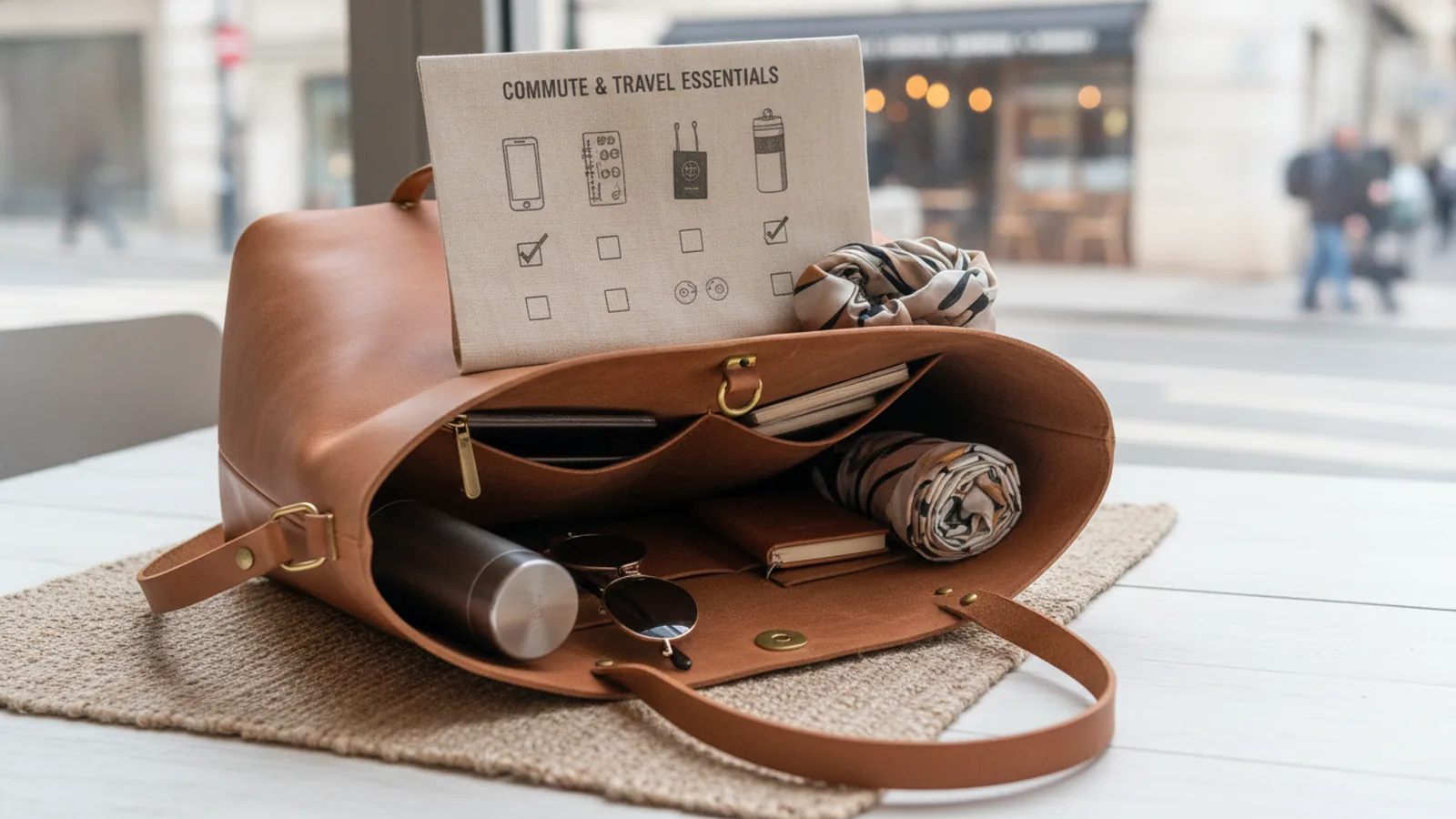
Write a list of your daily essentials and keep it on your phone or in a small notebook. A basic list might include: phone and charger, wallet with cards and cash, keys, a reusable water bottle, a small umbrella, hand sanitizer, tissues, and any medication you need. For travel, add a passport, boarding pass, and a portable power bank. Review your list once a week and adjust it for seasonal changes, like adding sunscreen in summer or a warm scarf in winter. Having a written checklist helps you pack faster in the morning and reduces the chance of forgetting something important. When you pack for a trip, place the checklist inside the bag's inner pocket so you can verify you have everything before leaving your hotel. This simple habit gives you peace of mind and saves time when you're in a hurry.
Arrange Items in Zones and Layers
Divide the interior of your bag into three zones: the back panel for flat items like documents and a tablet, the middle for bulky items like a water bottle or lunch container, and the front pockets for small things you need often, such as a transit card, lip balm, and keys. Place heavy items closest to your body when wearing the bag, because this balances the weight and reduces strain on one shoulder. Put items you use less frequently, like a charger and hand sanitizer, at the bottom of the main compartment, but keep them in a small pouch so they don't slide around. For quick access, use an exterior pocket that you can reach without opening the main zipper. When packing, push items down and smooth out wrinkles in your clothing, if you carry a change of clothes, so you maximize space. This layered approach helps you find everything easily and prevents small items from getting lost.
Secure Valuables in a Hidden Pocket
Identify which items you cannot afford to lose, such as your phone, wallet, passport, or travel cards. Set aside these valuables and plan to place them in a pocket that is not visible from the outside, ideally a zippered pocket on the back panel or inside a small pouch. If your bag lacks a hidden compartment, use a dedicated wallet or a zippered pouch and place it at the bottom of the main compartment beneath other items. While commuting or walking in crowded areas, keep the main zipper facing forward and hold the bag close to your body. When you sit down, place the bag on your lap rather than the floor. This practice makes it difficult for pickpockets to access your valuables without you noticing. Even if your bag has an exterior pocket, do not store your phone or wallet there because they are easy targets.
Adjust the Strap for Comfort and Fit
Put on your bag with the items inside, and then adjust the strap so the bag sits at your hip or slightly above, not your lower back. A well-fitted strap keeps the bag stable when you walk and reduces the swinging motion that can cause shoulder pain. For a crossbody style, the strap should be short enough that the bag rests at the front of your hip, so you can easily reach it with your hand. If the bag has a padded strap, position it over your shoulder or across your chest for better weight distribution. Take a few steps and do a quick test: lean forward, bend down, and turn around to see if the bag stays in place and does not hit your side. When you use the bag for travel, you may need to readjust the strap if you wear a thick coat. A comfortable fit prevents chafing and keeps you from feeling fatigued during a long commute.
Develop a Daily Packing Routine
Create a bedtime routine: the evening before, empty your bag of any random receipts and trash, then repack it using your checklist. Start with the items you don't need until you arrive, placing them at the bottom, and end with the things you'll need first in the morning, like a transit card or a phone, in the front pocket. As you pack, assess each item: if you didn't use it in the past week, remove it to lighten the load. In the morning, do a quick final check by touching the items on your checklist as you see them in the bag. This routine takes less than five minutes and eliminates the morning panic of searching for keys. For travel, follow the same process but include a travel-specific checklist of documents and chargers. Over time, packing becomes automatic, and you'll always know where your essentials are.
Quick Reference
| Situation | Action | Why it helps |
|---|---|---|
| You're standing at the ticket gate and need to find your transit card quickly. | Store your transit card in a specific exterior pocket that you can reach with one hand, and always put it back in the same spot after use. | This avoids fumbling at the gate, reduces delays for others, and prevents you from dropping the card while digging through a deep bag. |
| You're walking in a crowded street and are worried about pickpockets. | Move your wallet and phone into an interior zippered pocket, keep the bag's main zipper forward, and place your hand over the zipper while walking. | Interior pockets are much harder for thieves to access unnoticed, and keeping the zipper visible helps you detect any tampering. |
| You arrive at your destination and notice your shoulders hurt from carrying a heavy bag. | Stop and remove any non-essential items, then reposition the strap so the bag sits higher on your back, or switch to a crossbody carry with the strap across your chest. | A well-adjusted fit spreads weight more evenly and reduces strain on one shoulder, making your journey more comfortable and preventing long-term pain. |
Common Issues
- Small items like pens and earbuds drift to the bottom and are hard to find.: Use small pouches or a pencil case to group these items, and place them in a dedicated side pocket rather than the main compartment.
- The bag feels too heavy even though you think you packed lightly.: Weigh your bag on a kitchen scale and aim for under 10% of your body weight; then remove items you haven't used in the last week or that are duplicates.
- You frequently forget to pack essential items during a busy morning.: Create a permanent checklist on your phone or a card that lives in the front pocket, and repack the bag each evening using that checklist.
Advanced Tips
- Use packing cubes or small pouches to compress clothing and keep items in separate color-coded zones, making unpacking at your destination faster.
- Attach a lightweight carabiner to the outside of the bag to hook your water bottle or keys, freeing up interior space and preventing spills.
- Periodically clean out your bag at the end of each week, wiping down the interior and checking for debris or crumbs that could damage electronics or stain linings.
Final Checklist
- Close all zippers and secure the main opening so nothing falls out when you carry the bag.
- Reach every pocket without removing the bag from your shoulder to confirm easy access to essentials.
- Remove any items you didn't use in the past week to keep the bag light and organized.
- Verify that your phone, keys, and wallet are in their designated spots before leaving home.
FAQ
What if my bag doesn't have enough pockets?
Add organization with small pouches or a bag organizer insert. These inexpensive tools create zones inside the main compartment, so you can group items by category. Use one pouch for tech accessories, another for personal care, and a third for documents. Place the organizer inside the bag, and you'll be able to find things easily without a dozen built-in pockets.
How do I choose between a tote, crossbody, and backpack?
Consider the weight you carry and how you'll use the bag. A tote is easy for quick access but can strain one shoulder if heavy. A crossbody distributes weight better and frees your hands. A backpack is best for heavy loads or long walks, but it may be less convenient to access items on the go. Try each style with your typical items to see which feels most comfortable and practical for your routine.
Is it safe to keep my wallet in an exterior pocket?
It's risky. Exterior pockets are more exposed and easier for pickpockets to access without notice. Always keep valuables like your wallet, phone, and passport in an interior zippered compartment. If your bag only has exterior pockets, use a small pouch that zips and place it near the bottom of the main compartment, and stay alert in crowded areas.