Choosing A Versatile Coat For Work And Weekends Checklist For First Time Readers
A practical step-by-step guide to choosing a versatile coat for work and weekends checklist for first-time readers, including preparation, instructions, common issues, tips, and next steps.
Choosing A Versatile Coat For Work And Weekends Checklist For First Time Readers
This guide helps first-time readers choose a versatile coat that works for both work and weekend activities. It covers key factors like fabric, fit, color, and style, and provides a step-by-step checklist to ensure you pick a coat that is practical, comfortable, and appropriate for various settings. The goal is to help you make a smart investment that will serve you well for years, without breaking the bank or compromising on style.
Fast Answer
- Focus on a classic, neutral-colored coat in a timeless silhouette like a trench or a wool peacoat, made from durable, weather-appropriate fabric.
- Ensure the coat fits well over your usual work clothes and allows easy movement, while also being comfortable enough for casual weekend wear.
Before You Start
- Assess your local climate and typical winter temperatures to determine the insulation level needed for your coat.
- Review your personal style and identify colors and cuts that you already wear frequently to ensure the coat will blend with your wardrobe.
- Measure your chest, shoulder width, and arm length to have accurate dimensions when trying on coats or checking online sizing charts.
- Consider the primary activities you'll use the coat for, such as commuting, outdoor walks, or casual outings, to prioritize features like hoods or water resistance.
Step-by-Step Instructions
Determine Your Climate Needs
Begin by looking at the typical winter weather in your area. Does it get below freezing with snow, or is it mild and rainy with occasional cold snaps? This will tell you how much insulation and water resistance you need. For cold, dry climates, choose a coat with a thick lining or down fill. For wet and mild conditions, a water-repellent shell with a removable inner layer offers versatility. Check the temperature range where you'll be outdoors most, and consider wind chill. If you travel frequently, think about whether the coat will work for both your home and visits to colder or warmer places. A good rule is to pick a coat that you can layer under or over other clothing to adapt to different temperatures. This assessment is crucial because a coat that is too heavy for your region will be uncomfortable, and one that is too light will fail to keep you warm.
Choose a Timeless Silhouette
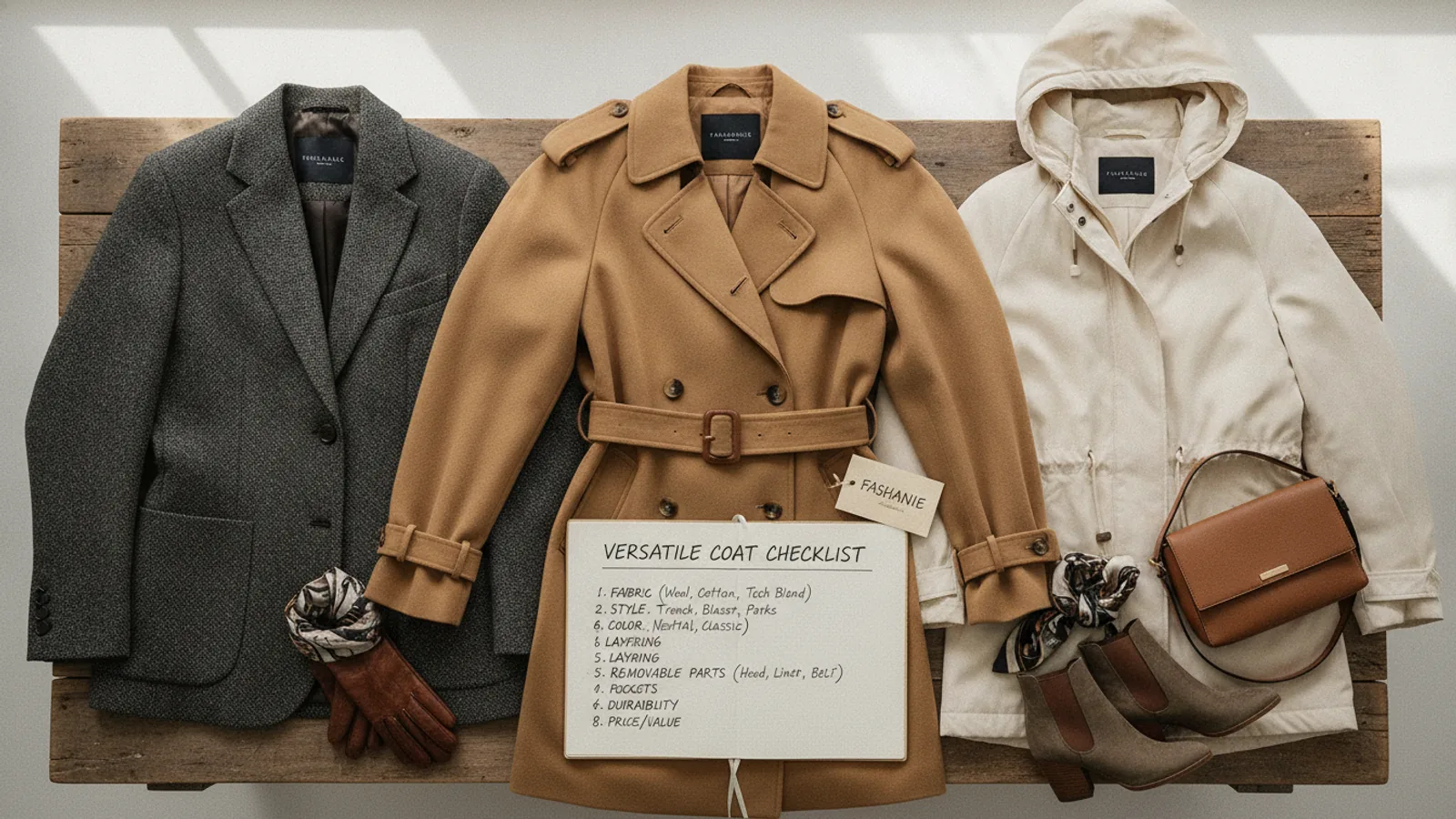
A versatile coat should have a classic shape that does not go out of style quickly. Options like a tailored wool peacoat, a trench coat, or a simple parka with a clean design are safe bets. Avoid overly trendy cuts, extreme proportions, and loud patterns unless you have a very specific wardrobe. The silhouette should flatter your body type and allow you to move your arms freely. When trying on, raise your arms, bend forward, and sit down to ensure there is no pulling across the back or shoulders. The coat should also have enough room to fit a blazer or a thick sweater underneath during colder days. Pay attention to the length: a coat that hits mid-thigh is generally more versatile than one that is cropped or floor-length, as it offers coverage without being too bulky. A timeless silhouette ensures your coat remains wearable for many seasons, giving you better value for your purchase.
Select a Neutral, Flexible Color
Color is a key factor in versatility. Choose a neutral shade like black, navy, grey, camel, or olive, as these tones complement most other colors and patterns in your wardrobe. A neutral coat can be dressed up with work attire and dressed down with jeans and sneakers for the weekend. Avoid bright or highly saturated colors unless you have a specific style that embraces them. If you want a pop of color, consider accessories like scarves or hats instead. Also, think about how the coat color will look with your hair color and skin tone; you want to like how you look in it. A dark coat may show lint more easily, while a light coat may get dirty quickly. Choose a color that hides minor stains and is appropriate for both professional and casual settings. This decision is important because a well-chosen color expands your outfit possibilities and ensures you reach for the coat often.
Inspect Fabric and Construction Quality
The fabric determines the coat's durability, warmth, and care requirements. For wool coats, look for a high percentage of wool (at least 70%) blended with other fibers for durability. Synthetic fabrics like nylon or polyester can be water-resistant and lightweight but may not be as breathable. Check the weave or knit for density; a tightly woven fabric is more windproof and longer-lasting. Examine the lining to ensure it is smooth and durable, as a lining that tears easily will ruin the coat. Feel the weight of the fabric; a heavier fabric generally means better quality, but it may be too bulky for some uses. Look at the stitching on the seams, hems, and buttons; they should be even and tight with no loose threads. Press the fabric and see if it bounces back; if it wrinkles easily, it may not hold its shape. High-quality construction also includes sturdy zippers, secure snaps, and solid buttons. This inspection is vital because a well-made coat will last for years, saving you money in the long run.
Ensure the Right Fit and Comfort
Fit is paramount for both comfort and style. The coat should not be too tight or too loose. When trying it on, wear the type of clothing you'll typically wear underneath, such as a suit jacket or a thick sweater. The shoulders should align with your own shoulders; the sleeve length should end at your wrist bone. You should be able to button the coat without pulling, and there should be room to move your arms. The length of the coat should be proportional to your height; for most people, a hem around mid-thigh or a few inches below the knee works well. If the coat is too long, it can make you appear shorter; if it's too short, it may not provide enough warmth. Also, consider the weight of the coat; if it feels heavy on your shoulders, it may cause fatigue during long wear. Remember that you can always alter some aspects like sleeve length, but major adjustments like the chest or shoulders are difficult and costly. Taking time to get the fit right ensures you feel good and look good while wearing the coat.
Evaluate Versatility and Lifestyle Fit
Finally, think about your daily life and how the coat will fit into it. Will you be commuting on foot or by car? Do you need a hood for unexpected rain or snow? Are there pockets that are deep enough for your phone, wallet, and keys? Consider whether the coat is suitable for formal work settings and casual weekend errands. A coat with a removable hood or liner can adapt to different weather and occasions. Check if the coat is wrinkle-resistant, as it might be packed for travel. Think about the maintenance: will you have time to take it to a dry cleaner, or would you prefer a machine-washable fabric? Also, consider the coat's weight and packability; if you often travel, a lighter, compressible coat might be more practical. The best versatile coat is one that you can wear almost every day, no matter the season or activity. By evaluating how the coat matches your lifestyle, you ensure that it becomes a staple in your wardrobe, not just an occasional item.
Quick Reference
| Situation | Action | Why it helps |
|---|---|---|
| You live in a rainy, mild climate and need a coat for work and weekends. | Choose a water-resistant trench coat or a parka with a removable hood, and ensure it has a zip-out warm liner for chilly days. | These features provide flexibility for varying weather conditions, keeping you dry and comfortable without overheating or getting soaked. |
| You have a formal office dress code and limited closet space. | Select a tailored wool coat in a dark neutral like black or navy, with a smooth, refined finish, and avoid sporty details like logos or oversized pockets. | A classic wool coat looks professional and pairs well with suits and dress shoes, while its timeless design means it won't need frequent replacement. |
| You plan to travel frequently and need a versatile coat for different climates. | Look for a lightweight, packable coat with multiple layers, such as a shell with a zip-in fleece liner, and choose a fabric that resists wrinkles, like a synthetic blend. | This type of coat can adapt to warm and cold conditions, fits easily into luggage, and maintains a neat appearance after being packed. |
Common Issues
- The coat is too long and makes you feel restricted or looks overwhelming.: Take the coat to a tailor to have the hem shortened to a length that falls mid-thigh or slightly above the knee, ensuring it doesn't interfere with walking and flatters your proportions.
- The coat fabric pills easily or attracts lint and pet hair, making it look worn quickly.: Invest in a fabric shaver or lint roller to regularly remove pills and hair, and consider treating the coat with a fabric protector spray to reduce static and repel debris.
- The sleeves are too long, causing you to have trouble using your hands or making the coat look sloppy.: Have a tailor shorten the sleeves to end at the base of your thumb or slightly above, so that your shirt cuffs can still show slightly, giving a polished and comfortable fit.
Advanced Tips
- Consider buying a coat with a two-way zipper or hidden button placket for extra wind protection and to allow you to sit comfortably without the coat bunching.
- Look for a coat with a high collar or a built-in draft guard at the neck to keep cold air out without needing a scarf.
- Choose a coat with a water-repellent finish that you can re-apply at home using a spray-on waterproofer, to maintain its performance over time.
Final Checklist
- Check the coat's fabric composition and ensure it matches your climate and care preferences.
- Try on the coat with the layers you'll wear underneath to confirm a comfortable and flattering fit.
- Verify that the color and style integrate seamlessly with your existing wardrobe for both work and casual occasions.
- Inspect all fastenings, pockets, and seams for quality, and confirm that the coat is easy to put on and take off with your regular activities.
FAQ
How much should I spend on a versatile coat?
The amount you spend should be based on your budget and how often you'll wear it. In general, a higher-quality coat made from durable materials will last longer and provide better value over time. However, you can find good options at various price points. Focus on getting the best construction and fit you can afford, rather than a specific price. Remember that you can also look for sales or second-hand options to get a quality coat for less.
Can I wear a heavy coat indoors, or should I remove it?
It's usually best to remove a heavy coat once you're inside to stay comfortable and avoid overheating. Many workplaces and homes are well-heated, so you'll likely be fine with just your indoor clothing. If you find the coat too warm to wear indoors, consider a lighter outer layer or a coat with removable inner insulation. Also, taking off your coat helps preserve its fabric and shape.
How do I know if a coat is well-tailored?
A well-tailored coat will have smooth shoulders without puckering, sleeves that hang straight and end at the correct length, and a back that lies flat without bunching. When you button the coat, it should not pull across the chest or hips. The overall silhouette should follow your body's natural lines without being too tight or too loose. If you're unsure, ask a professional tailor for their opinion, or compare it to coats you know fit well.