Choosing Comfortable Shoes For A City Weekend Checklist For First Time Readers
A practical step-by-step guide to choosing comfortable shoes for a city weekend checklist for first-time readers, including preparation, instructions, common issues, tips, and next steps.
Choosing Comfortable Shoes For A City Weekend Checklist For First Time Readers
This guide helps first-time readers choose comfortable shoes for a city weekend, focusing on fit, support, and practicality. It covers preparation, step-by-step selection, quick reference for common situations, and solutions to frequent issues, ensuring your feet stay happy while exploring.
Fast Answer
- Look for shoes with a wide toe box, cushioned sole, and flexible outsole that bend at the ball of your foot, and try them on later in the day when your feet are slightly swollen.
- Choose shoes that are snug at the heel but allow your toes to wiggle freely, and break them in gradually with short walks before your trip.
Before You Start
- Plan to shop in the late afternoon or evening, as feet naturally swell during the day, ensuring a more accurate fit.
- Wear the type of socks you plan to use with the shoes, as sock thickness affects fit and comfort.
- Measure both feet every time, as one foot is often larger; fit shoes to your larger foot for better comfort.
- Bring along any orthotics or custom insoles you use, so you can test them inside the new shoes.
Step-by-Step Instructions
Assess Your Walking Needs for the Trip
Start by thinking about how much walking you will actually do during your city weekend. Imagine waking up and heading out for breakfast, then wandering through museums, shops, and parks, and finishing with dinner. You might walk several miles each day, so your shoes need to handle both distance and varied terrain like pavement, cobblestones, and curbs. Write down the estimated hours of walking per day, perhaps eight or more. Then, consider any specific activities like hiking to a viewpoint or standing in long queues. This assessment is crucial because it sets the performance bar: if you plan light strolling, lighter shoes may work, but for heavy walking, you need maximum cushioning and support. Knowing your needs helps you ignore stylish but impractical options. Action: List your planned daily walking hours and terrain types to guide your selection.
Check the Shoe's Flexibility and Cushioning
Hold the shoe and try to bend it near the toe area. A good walking shoe flexes easily at the ball of the foot, mimicking your foot's natural motion, but provides stiff support in the middle for arch comfort. Then press the sole and heel cushioning to see if they feel spongy but not too soft. Place the shoe on a table and push down on the heel; it should have some give to absorb shock. Also, consider the outsole (the bottom) - it should have a textured pattern for grip, especially on wet city streets. Proper flexibility prevents foot fatigue, while adequate cushioning reduces impact on joints. A rigid shoe resists your foot's movement, causing strain, and overly soft shoes can lack stability. Action: Perform the bend test and press the heel to verify flexibility and cushioning.
Examine the Toe Box and Heel Fit
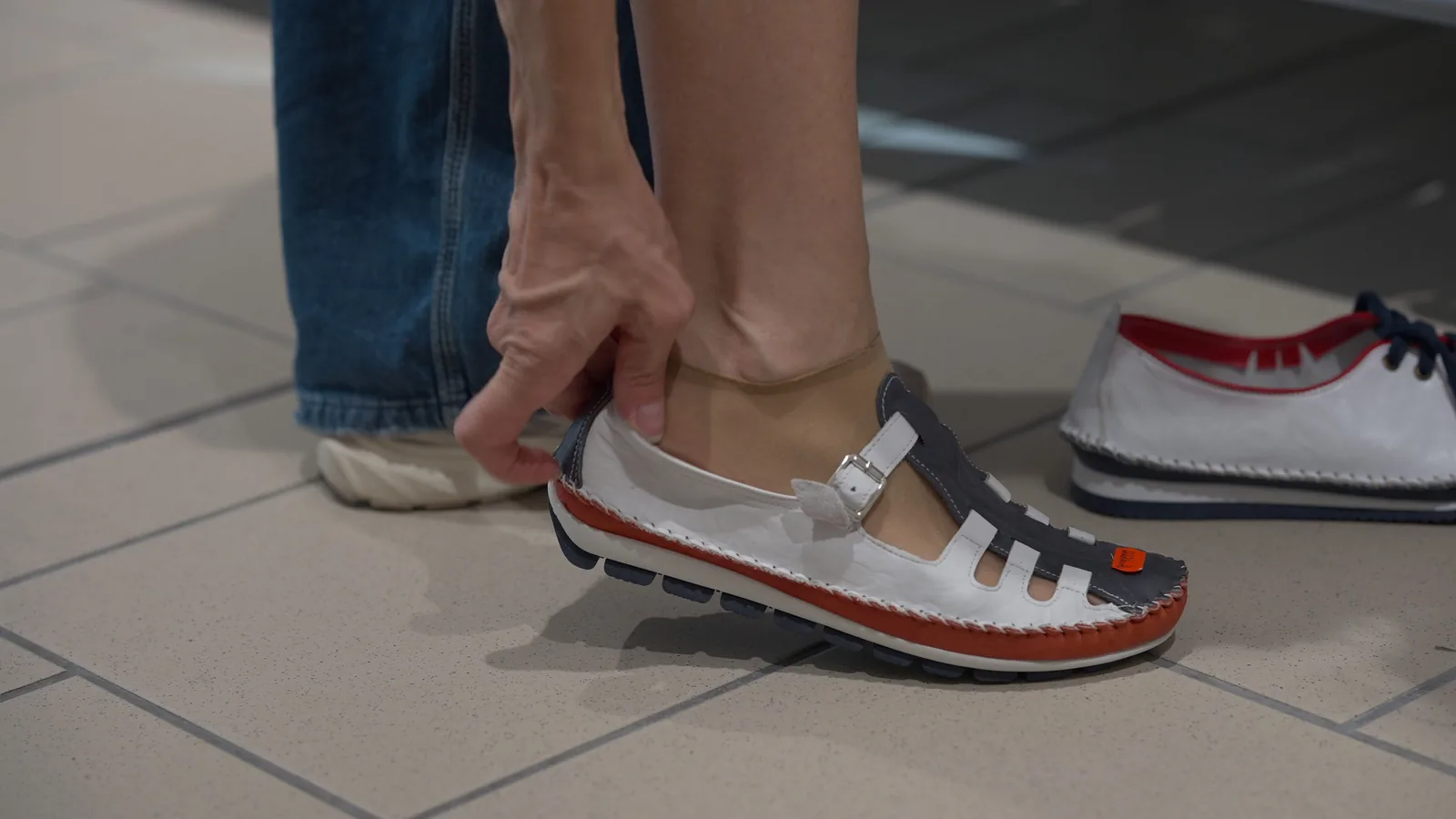
Insert your foot and lace the shoe securely. You should have about a thumb's width of space between your longest toe and the end of the shoe. Your toes should be able to wiggle freely without hitting the front or sides. The heel should feel snug, gripping your foot without slipping when you walk, but not tight enough to cause pressure. Walk around the store and pay attention to any rubbing or pinching. A roomy toe box prevents blisters and allows natural toe splay, which improves balance, while a secure heel reduces friction that causes painful blisters. If the shoe is too narrow, your foot will feel cramped; too wide, and your foot will slide, causing instability. Action: Wear the shoe for at least ten minutes, checking for adequate toe space and heel security.
Test the Arch Support and Insole Quality
Ask yourself if the shoe's insole feels supportive under your arch. You want moderate support that follows the natural curve of your foot without feeling like a bump. If you have flat feet or high arches, you might need extra support, but a good walking shoe should offer decent arch support for most people. You can remove the insole to check its firmness and shape. Also, consider whether you plan to use custom orthotics; if so, the insole should be removable. Proper arch support helps distribute your body weight evenly and reduces strain on your feet, legs, and lower back. Without it, you may develop arch pain or plantar fasciitis after a day of exploring. Action: Walk a few steps and notice if your arch feels supported and comfortable.
Evaluate the Shoe's Weight and Material
Pick up the shoe and feel its weight; a lighter shoe is often easier to walk in for long distances, but it must still provide enough support. Consider the material: breathable mesh allows air circulation, which is great for warm weather, but it might not be waterproof. Leather and synthetic materials can be more durable and water-resistant, but they may be heavier and less breathable. Also, look for seamless interiors or minimal stitching to reduce the risk of irritation. The right combination of weight and material affects your energy levels and foot comfort. A heavy shoe can make you feel tired, while a non-breathable shoe can cause sweaty feet and blisters. Action: Compare the weight of different pairs and check the material's breathability by examining the inside.
Do a Final Trial Walk and Break-In Plan
Wear the shoes around the store for at least 20 minutes to simulate real walking. Go up and down any stairs if possible, and walk on different surfaces like tile and carpet. Pay attention to any hot spots or discomfort. If the shoes feel good, plan a break-in period: wear them for short walks (e.g., 30-60 minutes) at home for a few days before your trip. This allows the shoes to mold to your feet and reduces the risk of blisters on the first day. Avoid taking brand-new shoes on a long walk without preparation, as your feet need time to adjust. A successful trial walk confirms that the shoes are comfortable and functional for your needs. Action: Do a thorough in-store trial and schedule a break-in period.
Quick Reference
| Situation | Action | Why it helps |
|---|---|---|
| You feel hot spots or a rubbing sensation after walking in your new shoes for an hour. | Stop walking and immediately apply a blister bandage or moleskin to the affected area. | This prevents friction from causing a painful blister that could ruin your day. |
| Your feet slide forward in your shoes when walking downhill. | Tighten the laces properly, especially the top eyelets, to secure your heel. | A snug heel prevents your foot from sliding forward, which would squish your toes and cause discomfort. |
| The shoes feel comfortable in the store but hurt after 2 hours of walking. | Replace the insole with a cushioned one that offers better arch support. | The original insole may lack adequate shock absorption, so upgrading can significantly improve comfort. |
Common Issues
- Shoes cause blisters around the heel.: Wear seamless socks and use heel grips or a second pair of socks for extra protection.
- Your feet ache in the arch after a day of walking.: Use custom orthotics or arch-supporting insoles, and consider doing gentle foot stretches in the evening.
- The shoes are slippery on wet pavement.: Check the outsole for a rubber compound with deep lugs, and if needed, apply a non-slip sole treatment.
Advanced Tips
- Rotate between two pairs of comfortable shoes during your weekend to allow each pair to air out and reduce repetitive stress on your feet.
- Condition your feet before the trip by doing calf stretches and foot exercises to improve flexibility and strength.
- Use moisture-wicking and cushioned socks specifically designed for walking, as they reduce friction and keep feet dry.
Final Checklist
- Ensure there is a thumb's width of space between your longest toe and the shoe's end.
- Confirm that the shoes bend at the ball of your foot, not in the middle.
- Walk in the shoes for several minutes to test for any pressure points or slippage.
- Verify that the shoes have a water-resistant or waterproof upper if rain is forecast.
- Plan to break them in by wearing them for short periods before your trip.
FAQ
What is the best time of day to buy walking shoes?
Shop in the late afternoon or evening. Your feet naturally swell during the day, so buying shoes then ensures a better fit and helps avoid shoes that are too tight when you walk.
How should walking shoes fit?
There should be about a thumb's width of space between your longest toe and the shoe's end. The heel should be snug without slipping, and your toes should be able to wiggle. This prevents blisters and provides stability.
Do I need to break in new walking shoes?
Yes, it is wise to break them in gradually. Wear them for short periods around the house or on easy walks for a few days to let them soften and mold to your feet, which reduces the risk of blisters and discomfort.