How To Find Authentic Handmade Leather Bags Online
A practical step-by-step guide to How to find authentic handmade leather bags online, including preparation, instructions, common issues, tips, and next steps.
How To Find Authentic Handmade Leather Bags Online
Finding authentic handmade leather bags online means learning to separate workshop-made goods from factory imitations. This guide walks you through preparing your senses, asking the right questions, reading photos and descriptions closely, and confirming details with sellers before you buy. You will learn what slow leather craft actually looks like, how to spot machine-perfect stitching and vague sourcing claims, and how to protect your purchase with clear written records. The process is calm and methodical, not rushed. By the end, you will know how to judge a bag by its visible construction, maker story, and honest communication, so your money supports real artisans instead of a label that only sounds handmade.
Fast Answer
- Look for visible hand-stitching, uneven but strong saddle stitches, and natural leather edges that show the fiber structure instead of plastic-like painted coatings.
- Ask the maker directly for photos of the workshop, the cutting table, and the same bag from previous batches, then compare the details before you pay.
Before You Start
- Set aside quiet time to study leather craft basics: learn the difference between full-grain, top-grain, and bonded leather, and how edge finishing reveals true workshop work.
- Gather a simple checklist: a note file for seller answers, a folder for saved photos, and a way to record measurements so you can compare listings without confusion.
- Decide your must-have construction features, such as hand-stitched handles, solid brass or nickel hardware, and a lining that is sewn rather than glued.
- Prepare polite questions to ask every seller before buying, including who made the bag, where the leather was tanned, and how long the workshop has used that pattern.
Step-by-Step Instructions
Study the visual language of handmade leather
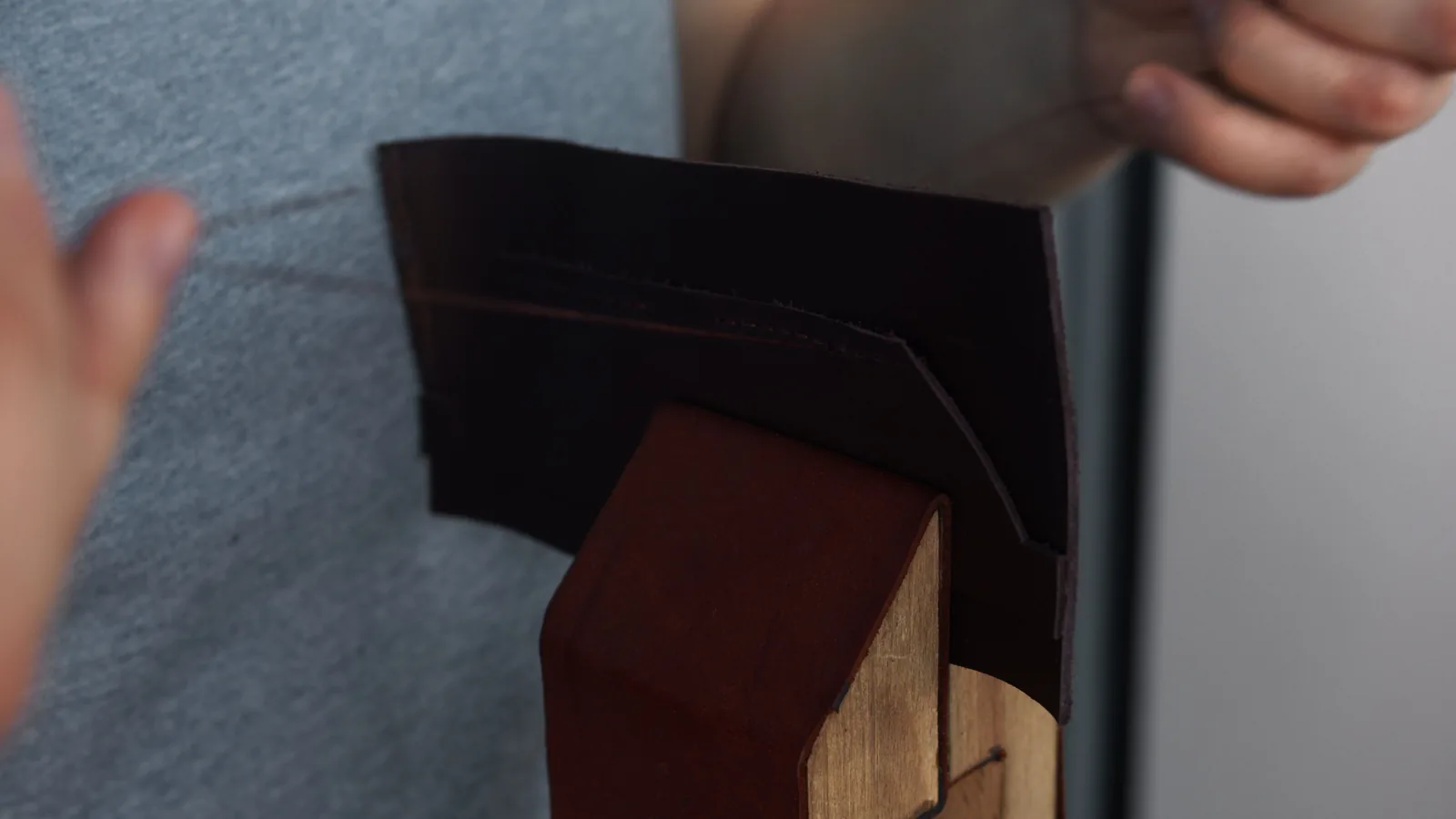
Before you shop, spend an hour looking at real workshop photos from many makers, not just one seller. Notice how hand-stitched leather looks slightly irregular in spacing but tight and even in tension, while machine stitching often looks perfectly uniform and flat. Check the edges: handmade edges are usually burnished or painted by hand, so they may show subtle waves or brush marks instead of a smooth plastic shell. Look at the leather surface for natural grain, scars, and color variation; these are normal in full-grain hides and rare in synthetic or heavily corrected leather. This visual vocabulary matters because your eyes must catch small clues that descriptions often hide. Save examples of good and questionable work in a folder so you can compare new listings quickly. When a bag looks too flawless in every stitch and every edge, ask yourself what process could produce that perfection at a small scale.
Research the maker and the workshop story
A real handmade bag usually has a human story behind it, but the story must be checkable, not just emotional. Read the seller's profile, website, or listing text for specific details: the city or region where the workshop sits, the name of the person who cuts and stitches, the tools they use, and the type of leather they prefer. Then look for consistency across different listings and social posts. A maker who shows the same hands, the same workbench, and the same patterns over months is far more credible than an account that suddenly appears with polished product shots. Search for interviews, craft fair records, or customer photos that show the bag in daily use. You are not looking for fame; you are looking for a traceable human process. If the maker cannot explain who does the work, that is a sign the bag may come from an anonymous factory.
Read listings for material and construction clues
The words in a listing often reveal more than the main photo. Look for clear material terms: full-grain leather, vegetable-tanned leather, or chrome-tanned leather. Be cautious when a listing says only genuine leather, real leather, or premium leather without explaining the animal, tannery, or finish. Check construction words too: hand-stitched, saddle-stitched, hand-burnished edges, and solid hardware. These terms describe processes, and processes leave visible marks. Read the measurements and compare them with the photos; a bag that looks large in one image may be small in reality. Look for a lining description and a hardware description. If the listing says the bag is handmade but also says the lining is glued or the edges are folded and sealed with a generic finish, ask how those steps fit a handmade process. The goal is to build a short list of claims you can verify with the seller.
Ask the seller precise verification questions
Write a short message with four or five direct questions, and keep your tone friendly and specific. Ask who made the bag and whether that person can describe the stitching method. Ask which tannery or region produced the leather and whether the seller can share a photo of the hide or the tannery stamp. Ask for close-up photos of the inside seams, the base, the zipper ends, and the strap attachments. Ask whether the hardware is solid metal or coated, and how the edges were finished. Request a photo of the same model from a previous batch so you can compare natural variation. A genuine maker will answer with details, may take a day or two, and will not pressure you. A reseller or factory account often replies with vague praise, repeated marketing lines, or immediate discounts. Save the entire conversation because it becomes part of your buying record.
Inspect photos for handwork evidence
When the seller sends photos, open them at full size and look for evidence that cannot be faked easily. Hand-stitched seams usually show a slight slant and a small knot or backstitch at the end, while machine seams may look fused or perfectly parallel. Look at the edge paint or burnish: handmade edges often have a slight sheen from wax and friction, and they may show tiny tonal shifts. Check the hardware for scratches, weight, and finish; solid metal usually has a deeper tone and cleaner engraving than plated pot metal. Look at the inside of the bag, especially the seams where the lining meets the leather. If the lining is glued, you may see wrinkles or a crusty line of adhesive. Compare the photos to the listing and to earlier examples from the same maker. If the seller only sends perfect studio images from the same angles, ask for a casual photo on a workbench or in daylight.
Build a buyer record and confirm before paying
Before you send money, create a simple record for the purchase. Save the listing text, the seller's answers, the photos, and the measurements in one folder. Write down the agreed details: leather type, stitching method, hardware material, edge finish, lining, color, and delivery time. Ask the seller to confirm these points in a final message. Then check the payment method and the return policy in your own account or provider documentation, because those rules vary. If the seller offers a return window, read exactly what condition the bag must be in and who pays for return shipping. If the bag is made to order, ask for a realistic completion date and how you will be updated. Once the bag arrives, compare it with your record before removing tags or using it. If something does not match, contact the seller promptly and politely with photos and the agreed details.
Quick Reference
| Situation | Action | Why it helps |
|---|---|---|
| A listing shows beautiful bags but no workshop photos or maker name. | Send a short message asking who made the bag, where the workshop is, and whether the seller can share a photo of the workbench and the current batch. | Authentic makers can usually provide simple, specific proof of their process, while resellers often avoid or delay these requests. |
| The seller says the bag is handmade but the stitching looks perfectly machine-uniform. | Ask for a close-up of the seam ends and the inside of the strap, then compare the slant, knots, and backstitching with known hand-stitched examples. | Machine stitching often leaves a different pattern and finish at seam ends, so close inspection helps you verify the claimed method. |
| You are ready to pay but the seller will not confirm material or return details in writing. | Pause the purchase and send one final message listing the exact details you need confirmed, then wait for a clear written answer before paying. | A written record of material, construction, and return terms protects you if the bag arrives different from the description. |
Common Issues
- The leather feels stiff, thin, and coated like plastic.: Ask the seller for the tannery name and a photo of the raw hide edge; real full-grain leather usually shows a fibrous cross-section and a natural surface, while coated split leather looks uniform and plastic-like.
- The seller uses vague phrases like premium quality without explaining the material.: Reply with specific questions about animal type, tanning method, thickness, and finish; if the answers stay vague, treat the listing as unverified and look for another maker who gives clear details.
- Photos show perfect studio lighting but no detail of seams or edges.: Request daylight photos of the bag on a plain table, including close-ups of the base, strap joins, zipper ends, and inside lining; honest makers will provide these without pressure.
Advanced Tips
- Learn to read leather grain direction and stretch marks; a maker who cuts panels with the grain aligned shows care that mass production often skips.
- Ask whether the pattern is the maker's own design, and request a photo of the paper or cardboard template; original templates reveal a real workshop process.
- Compare hardware weight by asking for a photo of the hardware on a small scale, or ask the maker to describe whether it is solid brass, solid nickel, or coated metal.
- Request a repair policy in writing; a maker who offers reasonable repairs usually understands their construction and expects the bag to last.
Final Checklist
- You have close-up photos of stitching, edges, lining, and hardware from the actual seller.
- You have written confirmation of leather type, construction method, dimensions, and color before payment.
- You have saved the full conversation, listing text, and photos in one folder for your records.
- You have read the return or repair terms in your own account or provider documentation and understand the steps if the bag does not match.
FAQ
How can I tell if stitching is truly done by hand?
Look for slight irregularity in stitch spacing, a visible slant, and small knots or backstitches at seam ends. Machine stitching usually looks perfectly uniform and may melt or lock at the ends. Ask for a close-up photo and compare it with known hand-stitched examples before you decide.
What should I do if the seller refuses to answer detailed questions?
Pause the purchase and send one clear message listing the details you need. If the seller still avoids specifics or pressures you to buy quickly, treat that as a warning sign. A genuine maker may be busy, but will usually answer reasonable questions in time.
Is it safe to buy a handmade bag from a seller with few reviews?
Few reviews are not automatically bad, but they mean you must verify more yourself. Ask for workshop photos, previous batch images, and written material details. Look for consistent information across the seller's listings and social posts. If the story and the photos match, a small seller can be a good choice.