What To Check Before A European Capsule Wardrobe For A Changeable Season
A practical step-by-step guide to what to check before a European capsule wardrobe for a changeable season, including preparation, instructions, common issues, tips, and next steps.
What To Check Before A European Capsule Wardrobe For A Changeable Season
Creating a capsule wardrobe for Europe's changeable seasons means choosing versatile pieces that layer well, resist light rain, and handle temperature swings from chilly mornings to warm afternoons. Before you start packing or shopping, check your destination's typical weather range, your planned activities, your luggage limits, and the laundry options available. This guide walks you through the essential checks so your clothing works hard for you, keeps you comfortable, and avoids overpacking or underpacking. You will learn how to evaluate your existing clothes, choose fabrics that breathe and insulate, and build a small set of outfits that mix and match for any forecast.
Fast Answer
- Check the extended forecast for your specific travel dates, including average highs and lows, rainfall probability, and any microclimate effects like coastal winds or mountain chill, so you know the actual temperature range you must prepare for.
- Check your luggage's size and weight limits, and measure how much space you can realistically fill, so you pick the right number of garments and avoid paying extra or struggling to zip your bag closed.
Before You Start
- Look up the average temperature, humidity, and precipitation for your travel weeks, and note how much the weather varies between morning, afternoon, and evening, because changeable seasons often swing twenty degrees in one day.
- Review your planned activities, from museum visits to hiking or restaurant dinners, and list any dress codes or practical needs, like sturdy shoes or a smart top, so your capsule covers every occasion.
- Gather your existing wardrobe and pull out garments that already fit well and suit the season; check for rips, stains, or worn fabric, and decide what needs replacing or mending before you travel.
- Measure your suitcase's dimensions and weight capacity, and consider using packing cubes to see how much you can realistically fit, so you avoid overpacking and keep your load manageable.
Step-by-Step Instructions
Start with a Realistic Weather Range
Before choosing anything, open a reliable weather website or app and enter your exact travel dates and cities. Look for the daily high and low temperatures, the chance of precipitation, and any symbols for wind, snow, or thunderstorms. Note the difference between the daytime high and the overnight low, because in changeable seasons that gap can be ten degrees or more. Then convert these numbers into a clear range, such as 'minimum low of 8 degrees at night, maximum high of 18 degrees in the afternoon.' This range becomes your guide for every fabric and layer decision. Without this check, you might pack only lightweight shirts and shiver through chilly evenings, or bring heavy sweaters that overwhelm warm afternoons. Having a precise range lets you plan a system of base layers, mid-layers, and outer shells that covers all conditions. Write the range on a note and keep it with your packing list so you can evaluate every item against it.
Assess Your Activity List for Clothing Demands
Take your itinerary and list every planned outing, from walking tours to fine dining, and note the likely dress code and physical demands. A long museum day may require comfortable walking shoes and layers for indoor air conditioning, while a nice restaurant might ask for a collared shirt or a dress. Hiking asks for moisture-wicking fabrics and sturdy soles, whereas city strolling might allow stylish but comfortable sneakers. Write these requirements next to each day, then circle the items that appear more than once, such as a versatile pair of dark jeans or a midi skirt. The purpose of this check is to prevent packing items that you never wear or, worse, missing essential pieces for a specific event. For example, if you plan to attend an opera or a smart dinner, you need one sharp outfit that works with your other pieces. By reviewing your activities first, you can identify the core garments that bridge multiple occasions, which is the heart of a capsule wardrobe.
Take a Honest Inventory of Your Current Clothing
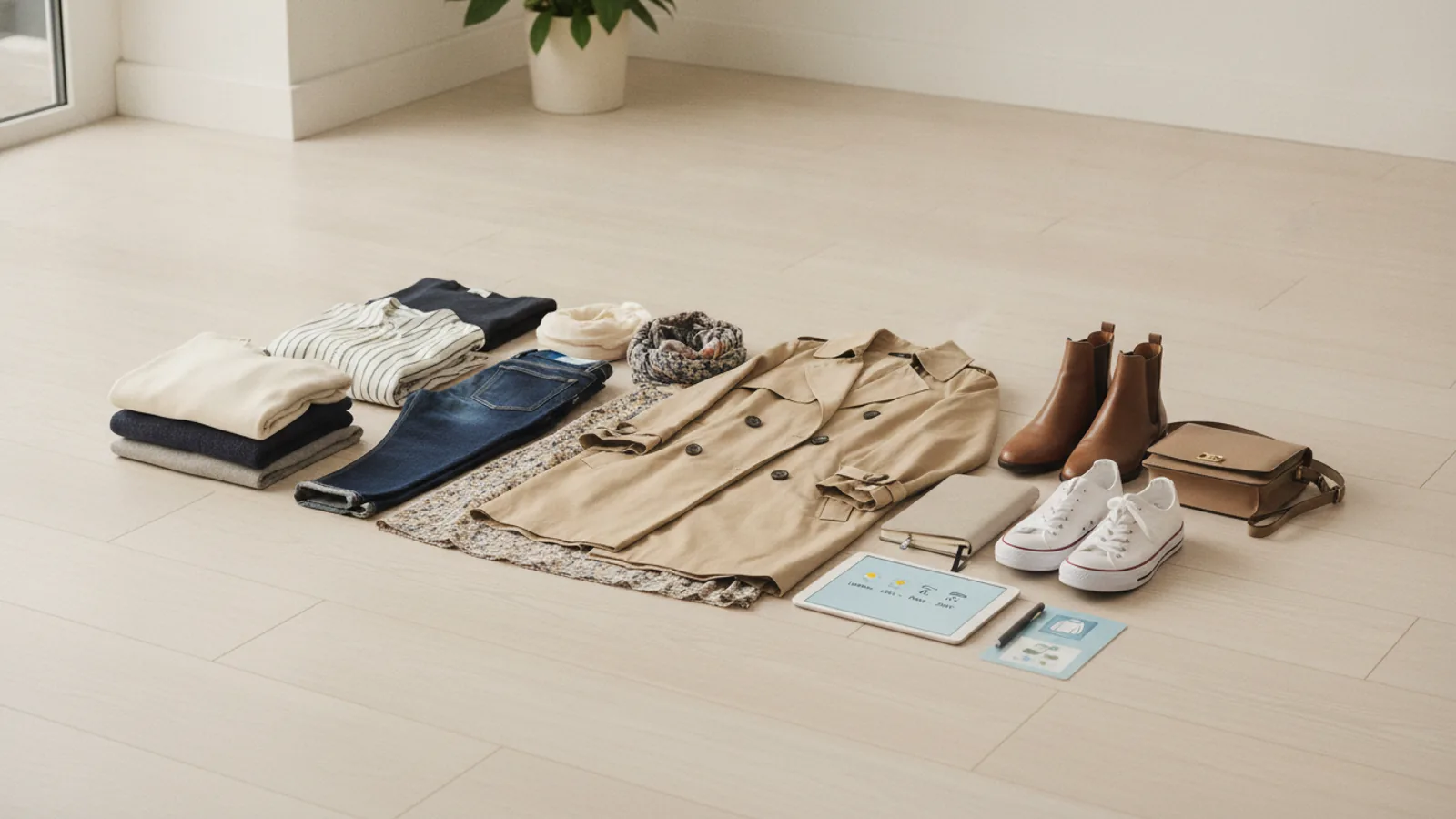
Lay out every item you think you might take, from T-shirts to coats, on your bed or floor. Sort them into piles: definitely take, maybe take, and do not take. For the 'maybe' pile, evaluate each piece using three tests: Does it fit well and flatter you? Is the fabric suitable for the weather range you noted in step one? Does it coordinate with at least three other items in your pile? If a garment fails any test, set it aside. This honest inventory is crucial because it stops you from packing items that are worn, faded, or simply wrong for the season; you save space and weight. It also reveals what you lack, like a decent waterproof layer or a warm mid-layer that you can still buy before departure. For each item you decide to take, note its current condition and whether it needs a last-minute wash or repair. By doing this, you create a realistic starting list that you can trim further in the next step.
Select Layers that Work Together
Choose a base layer of long-sleeve tops, a few short-sleeve shirts, and two to three bottoms like jeans, trousers, or a skirt. Then add one insulating mid-layer, such as a lightweight sweater or fleece, and one outer shell that repels wind and light rain, like a packable waterproof jacket. The key is to ensure that every top works with every bottom, and that the layers can be removed easily. For example, a merino wool T-shirt can be worn alone on a warm afternoon, then paired with a cashmere sweater and a rain jacket for a chilly morning. This systems approach means you only need a small number of garments, but you can create many outfits. A good test is to pack a jumper that you can button or zip over every shirt you bring, and a jacket that fits over the jumper. If a layer cannot be worn with at least two other items, leave it home. This maximizes versatility and minimizes bulk.
Check Fabric Performance for Moisture and Warmth
Read garment labels and feel the fabric to determine how it handles sweat, rain, and cold. For a changeable season, favor natural, breathable fabrics like cotton, merino wool, and lightweight cashmere, because they regulate temperature better than synthetics and resist odor. Also choose quick-drying materials for any strenuous activities. A cotton shirt will stay soggy when wet, so a synthetic base layer might be better for hiking. For outerwear, look for a jacket with a durable water-repellent finish that beads up water, and sealed seams that keep drizzle out. Check whether your mid-layer retains warmth even when slightly damp, which merino does, but heavy cotton does not. This fabric check is essential because a capsule wardrobe must work in real conditions, and the wrong fabric will make you miserable even if the garment looks right. For every item you plan to pack, ask yourself: 'Will I still be comfortable in this if it rains or if I walk uphill?'
Refine Your List with a Wear-and-Tear Runway
Once you have a tentative pile of clothes, do a 'wear test' by trying on each top with each bottom and each layer combination. Walk around, sit, and stretch to see if the outfit is comfortable and allows movement. Then imagine wearing it for a full day of sightseeing, from the cool morning to the warm afternoon, and adjust the layers accordingly. Remove any piece that feels too old, too tight, or too delicate for travel, because you need clothes that are sturdy enough for airports, trains, and wandering. Finally, count the total number of garments, including shoes, and consider if you can carry them easily. A good rule is to limit yourself to about five to seven tops, three to four bottoms, one mid-layer, one outer layer, and two to three pairs of shoes. This commitment to editing forces you to choose only the best, most versatile items, which is the true essence of a capsule wardrobe.
Quick Reference
| Situation | Action | Why it helps |
|---|---|---|
| You check the forecast and see a 10-degree swing between morning and afternoon. | Pack a lightweight merino or cotton long-sleeve shirt, a packable puffer or fleece, and a thin rain jacket, and layer them in that order from base to outer. | Layering lets you add or remove a piece to stay comfortable throughout the day, so you don't shiver in the morning or overheat by noon. |
| You realize your favourite denim jacket is too heavy for a rainy day but you want to bring it. | Swap the denim jacket for a synthetic or cotton-blend hooded jacket that has a water-repellent finish, and save the denim for a dry-day outing. | A waterproof layer protects you from drizzle and wind, and a lighter jacket takes up less luggage space while still keeping you warm. |
| You discover your only pair of shoes are leather loafers that cannot handle wet cobblestones. | Pack a pair of waterproof leather boots or trail shoes with good grip, and use the loafers for evening dinners or dry days inside. | Slippery surfaces and rain can ruin leather, so having shoes with reliable traction and water resistance keeps you safe and dry. |
Common Issues
- You packed a rain jacket that is not actually waterproof, and a sudden shower soaks you through.: Before the trip, test your rain jacket under a tap for a few seconds. If water soaks in, treat it with a durable water-repellent spray or replace it with a properly waterproof and breathable jacket that has taped seams.
- You bring a heavy sweater that is too warm for indoor museums, and you have to carry it while sightseeing.: Choose a lightweight, packable mid-layer like a cashmere jersey or a thin fleece that you can fold into a small pouch. If a sweater is bulky, leave it and rely on your outer shell plus a scarf for extra warmth.
- You cannot figure out how to make your capsule work for both a fancy dinner and a rugged hike.: Select garments that are versatile and dress up or down. For example, choose dark, well-fitted jeans, a crisp cotton top, and a smart blazer or trench that you can wear over a simple dress or with nicer shoes; the same pieces work for both activities.
Advanced Tips
- Invest in a 2-in-1 jacket with a zip-in inner fleece or liner, so you have a windproof outer and a warm inner layer that can be worn separately, adding three wearing options for the price of one item.
- Use a packing scope that includes an extra pair of foldable flats or lightweight sneakers that slip into the bottom of your bag, so you can switch for comfort without taking up much space.
- Choose double-duty items like a reversible belt, a scarf that can become a wrap, and a dress that works as a long tunic over trousers, multiplying your outfit possibilities without adding bulk.
Final Checklist
- Recheck the local weather forecast two days before departure and adjust layers if extreme temperatures or storms are predicted, keeping your specific travel dates in mind.
- Try on every combination of tops and bottoms you plan to bring, plus each layer, and discard anything that does not fit or flatter you, even if it seems stylish.
- Confirm that your outer layer is genuinely water-resistant and windproof, and that your shoes have good traction, so you stay dry and stable on wet pavement.
- Weigh and measure your full packed bag to ensure it meets your airline or train limit, and if it is overweight, remove one pair of shoes or one top that you marked as 'maybe.'
FAQ
How many pieces should a capsule wardrobe for a changeable season have?
A good target is around 15 to 20 pieces, including tops, bottoms, dresses, outerwear, and shoes. The exact number depends on your trip length, laundry access, and luggage size. The goal is to have enough variety for one to two weeks, but each piece should be able to mix with at least three others, so you can create many outfits with less. Remember to include a warm mid-layer and a waterproof outer layer because those are essential for changeable weather.
What if I need a smart outfit for a special occasion like a fancy dinner?
Pack one 'elevated' outfit that uses the same layering principles, such as a dark, straight-leg trouser or a midi skirt, a silk or satin blouse, and a structured jacket or blazer that you can also wear over jeans. This outfit should not require any new shoes if you have a pair of dressy flats or loafers that work for the event. Try to choose pieces in neutral colors that blend with your daily capsule, so that you don't need extra items.
How can I avoid overpacking when the weather is unpredictable?
Stick to a strict color palette and a maximum number of garments. Before packing, lay out everything and count your tops, bottoms, and layers. If you have more than, say, seven tops and four bottoms for a two-week trip, remove the extras. Also, plan to do a laundry load or hand-wash a few items during your stay, so you can pack less. Finally, remember that you can buy a cheap emergency layer if the weather turns unexpectedly, so you do not need to carry everything.