How To Plan Building An Outfit Around One Useful Statement Piece
A practical step-by-step guide to how to plan building an outfit around one useful statement piece, including preparation, instructions, common issues, tips, and next steps.

How To Plan Building An Outfit Around One Useful Statement Piece
Building a cohesive outfit around one standout garment is a skill that transforms a cluttered closet into a streamlined, expressive wardrobe. Instead of buying new clothes impulsively, you learn to anchor your look with a single piece—be it a bold coat, a patterned skirt, or a vividly colored blazer—and then support it with versatile, complementary items you already own. This approach saves time, reduces decision fatigue, and ensures you always have a polished, intentional appearance. By focusing on color theory, texture, and silhouette, you can create multiple outfits from one hero piece, making your wardrobe work harder for you. This guide walks you through the entire planning process, from assessing your lifestyle and selecting the right statement piece to styling it with neutral foundations and fine-tuning with accessories. You’ll also learn how to troubleshoot common issues like color clashes and proportion mismatches. The result is a reliable system for looking put-together with minimal stress, whether you’re dressing for work, a casual outing, or a special event.
Fast Answer
- Pick one bold item, then build every other choice around its color, texture, and shape using neutral or complementary pieces.
- Start with a simple base like jeans or a plain top, add your statement piece, then finish with shoes and accessories that echo one accent color from the piece.
Before You Start
- Take a full-length photo of yourself in a plain base outfit (like a simple tee and jeans) to see your proportions and what silhouettes flatter you.
- List your upcoming events or daily routines for the next week, noting the formality level and expected weather so your statement piece fits real occasions.
- Pull out three to five pieces from your wardrobe that you love but rarely wear because you 'don't know what to pair them with'—these are your candidate statement pieces.
- Sort your remaining clothes by color and texture, separating neutral basics (solids, plain fabrics) from louder items, so you can see what versatile support pieces you have.
Step-by-Step Instructions
Choose a Statement Piece That Fits Your Life
Your first action is to select the hero garment that will anchor your outfit. Start by looking at your closet and identifying one item that you absolutely love but often leave hanging—this could be a printed skirt, a brightly colored blazer, a textured sweater, or a dramatic pair of trousers. The key is to pick something that excites you and that you can realistically wear to at least one upcoming occasion. Consider your daily activities: if you work in a casual office, a bold cardigan might be better than a floor-length gown. If you're often outdoors, choose a statement outer layer like a patterned parka. Once you have your piece, hold it up in natural light and examine its colors, fabric, and shape. Write down the main colors you see, including any subtle undertones, because these will guide your entire outfit. Check that the piece fits you well—neither too tight nor too loose—and that you can move comfortably in it. Practical check: try on the item and walk around your room, sitting down and standing up. If you feel at all restricted or self-conscious, that's a warning sign. Why this check matters: An ill-fitting or impractical statement piece will make you miserable no matter how stylish it is, so you need to ensure it's suitable for your actual life.
Identify the Core Colors and Undertones
Now that you have your hero piece, your next action is to identify its exact color palette and undertones. Put the garment on a white surface or hold it against a white sheet, because neutral backgrounds help you see true hues. Look at the piece in natural daylight, not under yellow indoor bulbs, to avoid color distortion. Identify the dominant color—for example, a teal dress may have green and blue tones. Then note any secondary colors, like a floral print’s accent shades. Undertones matter: a blue might be warm (leaning green) or cool (leaning purple). To test, compare the piece to a piece of pure white paper and a cream paper. If the garment looks better against cream, it has warm undertones; if white, cool undertones. Write down two or three colors that appear most prominently—these will be your outfit’s accent colors. Also note the texture: is it matte, shiny, rough, or smooth? Texture affects formality and how light reflects. As a practical check, take a photo of the piece next to a neutral shirt you plan to wear, and compare the colors on your screen. Does the color look harmonious or jarring? If you're unsure, use a color wheel app or reference a printed wheel to find complementary colors (directly opposite) or analogous colors (adjacent). Why this check matters: Getting the color palette right prevents clashes that make an outfit look haphazard, and it gives you a concrete list of shades to pull from your wardrobe.
Build a Neutral Base Around the Piece
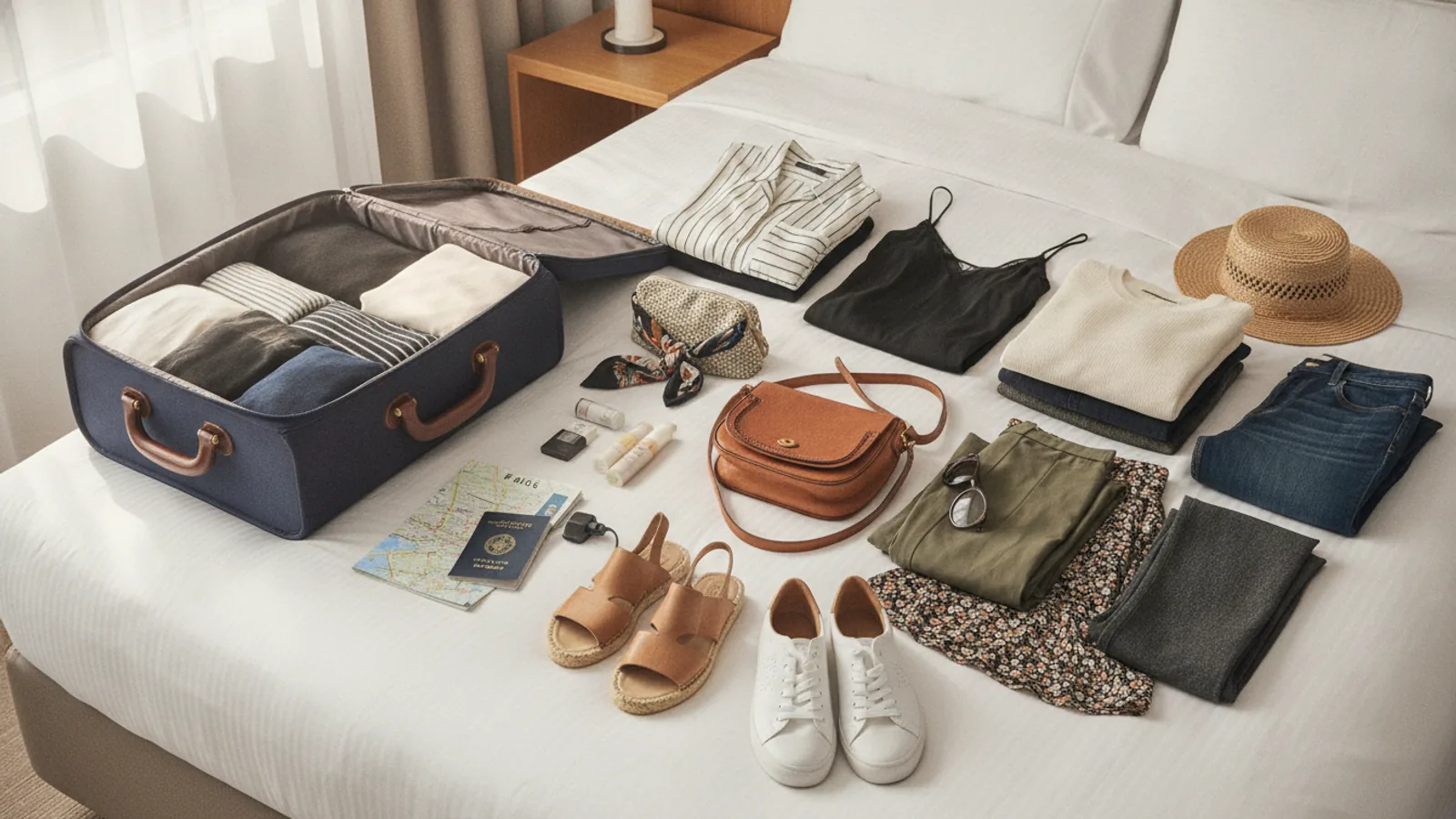
With your color palette in hand, your next action is to choose the base garments that will sit underneath or alongside your statement piece. The goal is to select neutral items—black, white, beige, gray, or dark denim—that complement your piece without competing for attention. If your statement piece is a printed top, pair it with solid-colored trousers or jeans in a shade that matches one of the less prominent colors in the print. If your hero is a patterned skirt, use a solid top in a color that appears in the skirt’s background. For outerwear, like a bold coat, you’ll wear simple layers underneath. A good starting point is a well-fitting white tee, a plain button-down shirt, or a simple knit sweater. Avoid adding any other patterns or bright colors at this stage. Check that the base’s color either exactly matches one of the piece’s colors or is a neutral that doesn’t clash. For example, a red skirt with a bright yellow background needs a top in a muted red, not blue. Lay both garments on a flat surface side by side and step back to see if they look cohesive. Try on the combination and take a photo from the chest up to evaluate the contrast. Why this check matters: A neutral base ensures the statement piece remains the focal point, preventing a chaotic look where two items fight for attention.
Add One or Two Supporting Colors
Now that your base is set, your next action is to introduce small doses of color that echo your piece’s palette. Pick one accent color—maybe a shade from your statement piece’s secondary colors—and use it in a supporting item like shoes, a belt, a scarf, or a handbag. The rule of thirds helps: your outfit should be roughly two-thirds neutral and one-third accent, not counting the statement piece itself. For example, with a multicolored floral skirt, you might choose a top in the skirt’s base color, then add a belt in the deepest color from the print, and shoes in a neutral. Keep accessories minimal to avoid clutter. As a practical check, gather up to three accessories that use the accent color and place them next to your outfit on a hanger. If any accessory adds a color that isn’t in your palette, remove it. Try on the complete look and walk around a room, looking in a full-length mirror. Move naturally to see if the colors feel balanced or if one area feels heavy. Why this check matters: Limiting supporting colors to those already in your piece creates harmony and makes the look appear deliberately curated, not randomly put together.
Balance Shapes and Proportions
Your next action is to evaluate the silhouette of your outfit as a whole, ensuring that the shape of your statement piece is balanced by the shapes of other garments. Think about volume: if your hero piece is a loose, oversized sweater, pair it with slim-fit jeans or a pencil skirt to avoid looking shapeless. If you have a flowing maxi skirt, wear a fitted top to highlight your waist. Look at the overall line from shoulders to ankles: you want a pleasing visual rhythm, often a contrast between fitted and loose elements. For example, a boxy blazer looks great with straight-leg trousers that are tailored. This balance also applies to length: a long cardigan over a tunic can create a nice elongation, while a cropped jacket with wide-leg pants can shorten your legs unless you wear heels. In front of a mirror, check which part of your body the statement piece draws attention to—this is your focal point. Ensure that other parts of the outfit don't create competing lines that confuse the eye. Take photos from three angles: front, side, and back. Note any areas where a garment bunches up or hangs awkwardly, and adjust by tucking, rolling, or changing the base piece. Why this check matters: Proper proportion makes you look taller, more polished, and prevents fashion mistakes like looking swallowed by fabric.
Fine-Tune with Accessories and Final Review
In this final step, your action is to add refined touches and do a last review before you wear the outfit. Start with small accessories: a watch, simple earrings, or a thin necklace that matches your metal tones (gold or silver) as per your palette. Avoid heavy statement jewelry unless it specifically picks up a color from your hero piece. Choose shoes that are both comfortable and fitting for the occasion—if you’re wearing a tailored blazer, opt for loafers or pumps, not athletic sneakers unless the look is deliberately casual. Check the outfit in natural light outdoors if possible, because indoor lighting can deceive you. Does the outfit look coherent? Are there any wrinkles, stains, or loose threads? Take a final photo and compare it to your initial plan. Ask yourself: does this outfit make me feel confident? If you’re hesitant about any element, change it—even if it’s just swapping a belt. Also, consider the weather: a statement wool coat in summer is a no-go. Once satisfied, set the outfit aside on a hanger with accessories in a bin, so it’s ready to wear without morning stress. Why this check matters: The final review ensures you haven’t overlooked an unflattering detail that could ruin your confidence, and it prepares you for a smooth dressing experience.
Quick Reference
| Situation | Action | Why it helps |
|---|---|---|
| You have a bold printed skirt but can't decide on a top. | Choose a solid top in the darkest color of the skirt’s print; tuck it in to define your waist. | This creates a cohesive look by linking the top to the skirt and keeps the print as the star. |
| You're wearing a bright blazer and don't know how to avoid overdoing it. | Keep everything else—shirt, pants, shoes—in neutral shades like black, white, or beige, and add a simple belt. | Neutrals recede, allowing the blazer to pop without visual competition, creating a balanced outfit. |
| You need to wear the same statement piece to two different events. | Swap the base and shoes: pair it with jeans and sneakers for a casual day, then switch to a dress shirt and boots for a dressier evening. | Changing the support pieces alters the outfit’s tone, making the same hero piece appropriate for multiple settings. |
Common Issues
- The statement piece’s color clashes with your skin tone.: Place a neutral layer between your face and the piece—like a white or cream tee under a blazer—or drape a scarf in a flattering shade near your face to redirect the eye.
- The outfit feels too plain despite all the planning.: Introduce one textured accessory, such as a leather belt, a knit beanie, or a suede handbag, to add depth without introducing a new color.
- The statement piece is too bold for your comfort level.: Start by wearing it as a 'second layer'—leave it open over a solid neutrals outfit, or tie it around your waist—so you can gradually adjust to the attention.
Advanced Tips
- Use a monochromatic base in a shade that appears in your statement piece to create an elongated, streamlined look.
- Play with texture matching: pair a silky statement blouse with a matte knit cardigan to add visual interest without using color.
- Take a video of yourself twirling to see how the piece moves; movement is part of the outfit’s impact.
Final Checklist
- Choose one statement piece that fits your lifestyle and flatters your body.
- Identify at least two colors from the piece to guide your supporting items.
- Select a neutral base that doesn’t compete with the statement piece.
- Do a full-length mirror and photo review, making any final adjustments.
FAQ
Can I wear a statement piece with too many colors?
Yes, but keep supporting items as neutrals or in shades that exactly match one of the piece’s colors. This prevents a kaleidoscope effect and keeps the piece as the focus.
What if I don’t have any neutral basics in my closet?
You can still build a look by using a simple white t-shirt or a pair of blue jeans as your base, since these are common neutrals. If finances allow, invest in one well-fitting neutral piece, like a gray camisole.
How do I know if my statement piece is too small or too large?
It’s too small if it pulls across the back or pinches under the arms; it’s too large if it swims on you or the shoulders extend past your natural shoulder bone. Try on and move, and if you’re unsure, ask a tailor for an opinion.